Cable tray systems engineered for onshore and offshore wind power infrastructure, covering turbine tower cable routing, nacelle systems, collection networks, transformer platforms, and substation interconnection.
Designed to withstand vibration, dynamic mechanical loads, corrosive outdoor environments, and longdistance utilityscale cable routing conditions.
SCENARIO CHALLENGES — Wind Farm Environment Challenges
Continuous Vibration and Dynamic Mechanical Stress
Wind turbine structures are exposed to continuous vibration, tower movement, rotational forces, and cyclic mechanical loading. Cable tray systems inside towers and nacelles must maintain structural stability and secure cable support under longterm dynamic operation.
Extreme Outdoor Corrosion Exposure
Wind farms are typically installed in coastal, offshore, mountainous, or openfield environments with high humidity, salt spray, UV exposure, and severe weather conditions. Corrosion protection directly impacts lifecycle reliability and maintenance intervals.
Vertical Cable Routing Inside Turbine Towers
Wind turbine towers require long vertical cable runs between the nacelle, converter systems, and tower base equipment. Cable management systems must control cable weight distribution, maintain bending radius requirements, and simplify maintenance access within confined spaces.
LargeScale Distributed Collection Infrastructure
Utilityscale wind farms involve extensive cable collection systems between turbines, MV transformer stations, and substations. Cable tray systems must support long outdoor routing distances while maintaining installation efficiency across difficult terrain conditions.
SOLUTION OVERVIEW — Wind Farm Cable Routing Structure
Typical Wind Farm Cable Routing Layout
Wind Turbine Nacelle
          │
          ▼
Tower Internal Cable Routing
          │
          ▼
Tower Base Converter / Control Systems
          │
          ▼
Collection Network
          │
          ▼
MV Transformer Station
          │
          ▼
Grid Connection Substation
The cable tray system is segmented according to turbine internal routing, outdoor collection infrastructure, and utility interconnection systems to optimize structural stability, corrosion resistance, and maintenance accessibility.
1. Nacelle & Tower Internal Routing Zone
Recommended System
- Aluminum Ladder Cable Tray
- Vertical Cable Support System
Typical Application
Routing of power, control, fiber optic, and instrumentation cables inside turbine towers and nacelle structures.
Key Engineering Parameters
- Vibrationresistant support configuration
- Lightweight structure for tower installation
- Vertical cable load management
- Controlled cable bending radius
Recommended Products
- Aluminum Ladder Tray
- Vertical Cable Cleats
- Tower Mounting Brackets
2. Tower Base & Converter Platform Zone
Recommended System
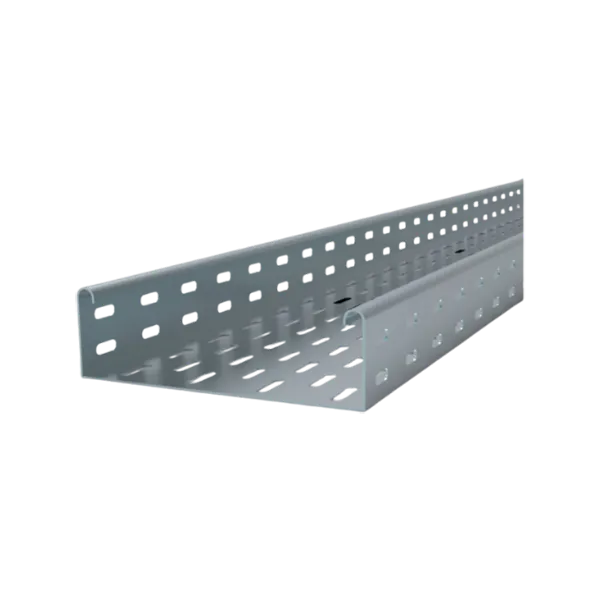
- Perforated Cable Tray
- Medium Duty Ladder Tray
Typical Application
Converter systems, lowvoltage distribution, control cabinets, and auxiliary electrical systems.
Key Engineering Parameters
- Flexible cable segregation
- Ventilation for heat dissipation
- Easy maintenance access within confined equipment areas
Recommended Products
- Perforated Tray
- Divider Systems
- Compact Support Frames
3. Outdoor Collection Cable Infrastructure
Recommended System
- Hot Dip Galvanized Ladder Tray
- Outdoor Structural Support System
Typical Application
Cable routing between turbine groups, transformer stations, and collection substations.
Key Engineering Parameters
- Longspan outdoor routing capability
- Windload resistant structure
- High corrosion resistance
Recommended Products
- HDG Ladder Tray
- Reinforced Structural Supports
- Expansion Splice Assemblies
4. Offshore or Coastal Exposure Zone
Recommended System
- FRP Cable Tray
- MarineGrade Aluminum Tray
Typical Application
Offshore platforms, coastal substations, and marineexposed wind infrastructure.
Key Engineering Parameters
- C5M corrosion resistance
- Salt spray durability
- Electrically nonconductive options available
Recommended Products
- FRP Ladder Tray
- Marine Aluminum Tray
- CorrosionResistant Fastener Systems
RECOMMENDED PRODUCTS — Wind Farm Application Selection
Aluminum Ladder Cable Tray
Why Recommended
Ideal for turbine tower installation where reduced structural weight and vibration resistance are critical.
Key Parameters
- Lightweight aluminum alloy
- High ventilation performance
- Corrosionresistant indoor turbine environment
Applicable Standards
IEC 61537
Vertical Cable Support System
Why Recommended
Designed for long vertical cable routing inside wind turbine towers.
Key Parameters
- Vertical load management
- Secure cable retention
- Maintenancefriendly configuration
Applicable Standards
IEC 61914 / IEC 61537
HDG Ladder Cable Tray
Why Recommended
Suitable for outdoor collection infrastructure exposed to weather and wind loads.
Key Parameters
- Hot dip galvanized finish ≥85 μm
- High mechanical load capacity
- Long outdoor service life
Applicable Standards
IEC 61537 / EN ISO 1461
FRP Cable Tray
Why Recommended
Recommended for offshore and coastal corrosion environments.
Key Parameters
- Excellent salt spray resistance
- UVresistant resin formulation
- Electrically nonconductive structure
Applicable Standards
ASTM D635 / IEC 61537
MarineGrade Aluminum Cable Tray
Why Recommended
Suitable for offshore platforms requiring lightweight corrosionresistant systems.
Key Parameters
- Marinegrade aluminum alloy
- Reduced structural dead load
- Corrosionresistant surface performance
Applicable Standards
IEC 61537
TECHNICAL COMPLIANCE — Standards & Certifications
IEC 61537 — Cable Tray and Cable Ladder Systems
Defines load performance, corrosion resistance, and grounding continuity requirements.
Procurement Value
Ensures structural reliability under industrial and utility operating conditions.
IEC 61914 — Cable Cleats for Electrical Installations
Defines mechanical restraint requirements for power cable retention systems.
Procurement Value
Supports cable stability under vibration and fault current conditions.
EN ISO 12944 — Corrosion Protection Standard
Defines coating systems according to atmospheric corrosion categories.
Procurement Value
Supports correct coating selection for C4, C5, and offshore environments.
EN ISO 1461 — Hot Dip Galvanizing Standard
Specifies galvanized coating quality requirements.
Procurement Value
Improves longterm outdoor durability and maintenance performance.
DNV Offshore Standards
Applicable for offshore wind and marine installations.
Procurement Value
Supports compliance with offshore utility infrastructure requirements.
PROJECT CASES — Reference Projects
Onshore Wind Farm Project — Central Asia
Project Overview
- Capacity: 450 MW
- Scope: Turbine tower systems and collection infrastructure
Delivered Solution
- Aluminum Ladder Tray
- Vertical Cable Support Systems
- HDG Outdoor Cable Tray Infrastructure
Quantified Results
- Total cable tray installation: 210 km
- Reduced tower installation labor by 19%
- Achieved IEC 61537 load verification compliance
Offshore Wind Infrastructure Project — Northern Europe
Project Overview
- Environment: Offshore marine exposure
- Scope: Offshore platform cable routing systems
Delivered Solution
- FRP Cable Tray
- MarineGrade Aluminum Systems
- CorrosionResistant Support Structures
Quantified Results
- Designed for C5M corrosion environment
- Reduced maintenance frequency in offshore conditions
- Installed system length: 72 km
TECHNICAL RESOURCES & NEXT STEPS
Available Technical Resources
- Wind Farm Cable Routing Guide
- Turbine Tower Vertical Support Design
- Offshore Corrosion Protection Guide
- Wind Load Structural Calculations
- BIM Models for Wind Projects
- IEC 61537 Compliance Reports
Engineering Support Options
Consult Wind Farm Cable Routing Design
Discuss tower routing strategies, offshore corrosion protection, and collection infrastructure planning.
Request Product Samples
Evaluate vibration resistance, corrosion protection, and installation compatibility.
Download Wind Farm Technical Manual
Access wind powerspecific engineering referenc